Source Round Faceted Cut Crystal Beads for Jewelry Making
Explore 30 listings of Round Faceted Cut Crystal Beads sourced from China. Buyers can compare specifications, materials, and prices for jewelry making, crafting, and decorative projects.
Key considerations
Products List
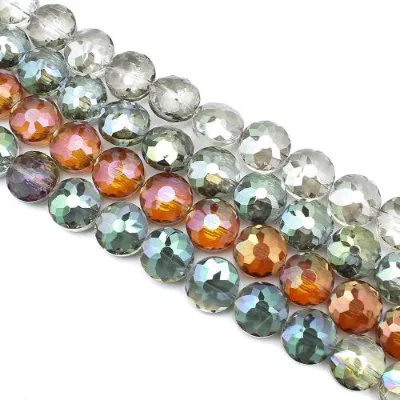
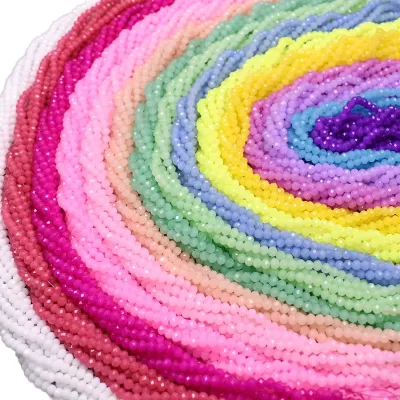


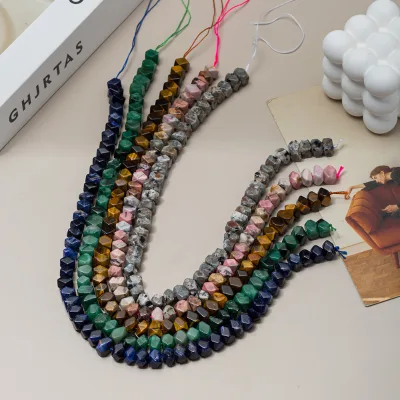


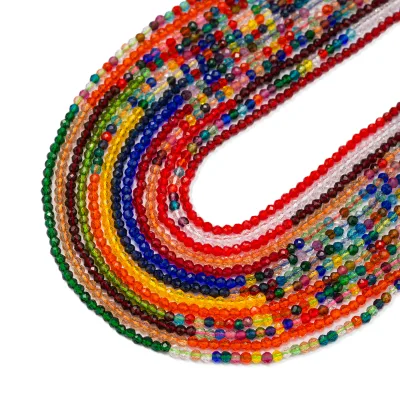


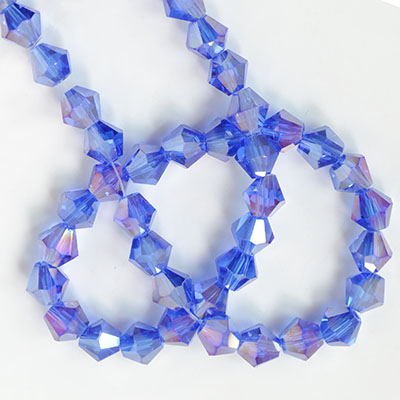


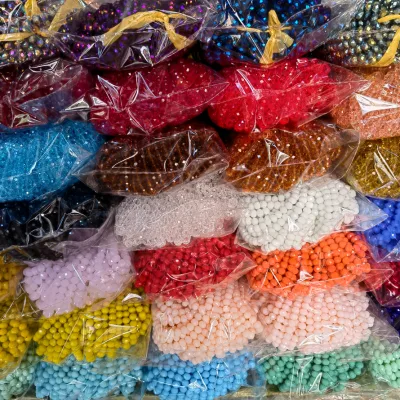
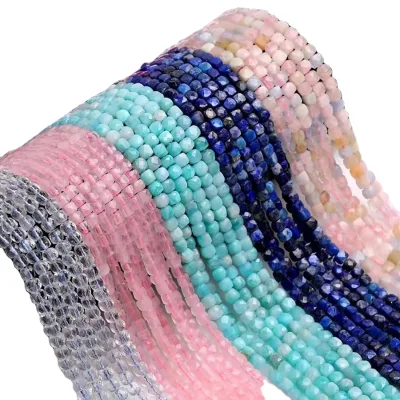

Comprehensive Sourcing Guide
Strategic Sourcing Guide for Round Faceted Cut Crystal Beads
Understanding Product Specifications and Variability
When sourcing Round Faceted Cut Crystal Beads, buyers must first navigate the inherent variability in product attributes, as observed in current market listings. The core keyword implies a specific geometric form and surface treatment, yet the underlying material composition can differ significantly between suppliers. Market observations indicate that while the shape is consistently described as "Round" or "Flat Round," the material base ranges from pure "Crystal" to "Glass Stone," "Lampwork," and "Glass." This distinction is critical for procurement strategies, as the optical properties and durability of natural crystal differ from synthetic glass alternatives.
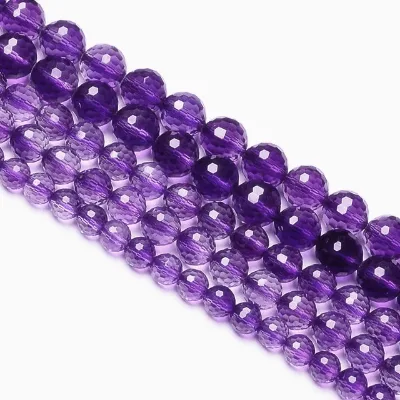
The physical dimensions of these beads are not standardized across the supply chain. Data shows item diameters ranging from small 3mm and 4mm sizes up to larger 18x10mm dimensions. The single package size also varies, with some listings indicating compact 3x3x3 cm packages, while others show elongated packaging of 15x1.9x1.9 cm. Buyers should verify the exact diameter and length specifications against their design requirements, as the "faceted" effect relies heavily on the precision of the cut relative to the bead's size. A 3mm faceted bead will present a different light-refracting profile compared to an 18mm counterpart. Furthermore, the surface treatment is typically "Polished," which enhances the "faceted" effect, creating a high-gloss finish essential for jewelry applications.
Compliance, Certification, and Origin Verification
In the B2B procurement of decorative components, verifying the origin and certification status is a primary risk mitigation step. The supply chain for these beads is concentrated in specific manufacturing hubs within China, with observed places of origin including Guangdong, Chongqing, and Wuzhou. Each region may have different industrial capabilities and quality control standards. For instance, Wuzhou is historically associated with synthetic gemstone production, which may influence the specific type of "crystal" or "glass stone" available in that region.
Certification requirements vary by buyer need. Some suppliers provide "Third Party Appraisal" certificates, which serve as an external validation of the product's claimed attributes. However, not all listings explicitly state a certification type, and some rely on internal quality standards such as "AAA" grade. Buyers must not assume that a product labeled "AAA" or "High Quality" automatically meets international safety or material standards without independent verification. The presence of a "Third Party Appraisal" is a strong indicator of due diligence by the supplier, but the specific scope of that appraisal (e.g., lead content, material purity) must be confirmed.
| Verification Aspect | Observation from Market Data | Buyer Action Required |
|---|---|---|
| Place of Origin | Guangdong, Chongqing, Wuzhou, China | Confirm specific factory location for logistics and compliance. |
| Certificate Type | Third Party Appraisal (observed) | Request specific certificate documents for material safety. |
| Quality Grade | AAA (observed) | Define internal acceptance criteria for "AAA" grade. |
| Material Claim | Crystal, Glass, Glass Stone | Request material composition reports to distinguish types. |
Cost Drivers and Pricing Structures
The pricing of Round Faceted Cut Crystal Beads is influenced by a complex matrix of factors, including material composition, customization options, and order volume. The observed price range in the market spans from $0 to $44.8 USD, a wide variance that reflects differences in product quality, size, and packaging. A lower price point often correlates with smaller sizes (e.g., 3mm), glass-based materials, or standard packaging, while higher price points may correspond to larger dimensions (e.g., 18x10mm), premium crystal types, or specialized finishes like "colorful plated" treatments.
Minimum Order Quantity (MOQ) is a significant driver of unit cost. Market data reveals an MOQ range from 1 piece to 3000 pieces. Suppliers offering an MOQ of 100 pieces or lower may be targeting smaller boutiques or prototyping needs, whereas those requiring 3000 pieces are likely focused on mass production. The "Selling Units" are typically listed as "Single item," but the "Packing" often specifies quantities per strand, such as "approx 35PCs/Strand." Buyers must calculate the total cost based on the strand count and the required total number of beads, rather than just the unit price per piece. Additionally, customization availability is a key cost factor; suppliers indicating "Customization: Available" may charge a premium for tailored colors, sizes, or packaging requirements.
Typical Applications and Design Integration
The versatility of Round Faceted Cut Crystal Beads makes them suitable for a broad spectrum of applications, primarily in the jewelry and crafting sectors. The "Usage" field in product listings frequently cites "For Jewelry Making" and "Other," indicating their adaptability. The "Findings" category often groups these beads with other components, suggesting they are integral to assembly processes. The "Effect" is described as "faceted," which is a critical design element for creating sparkle and light refraction in necklaces, bracelets, earrings, and decorative accessories.
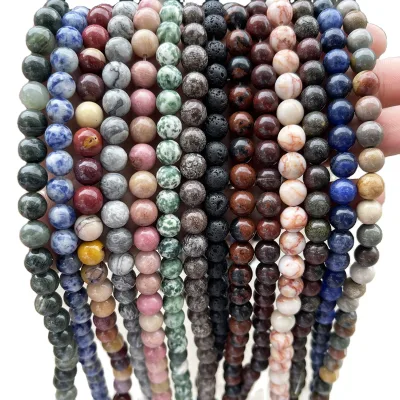
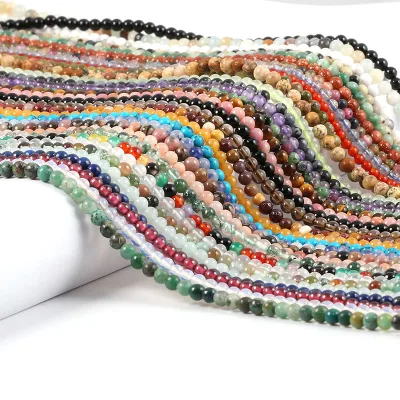
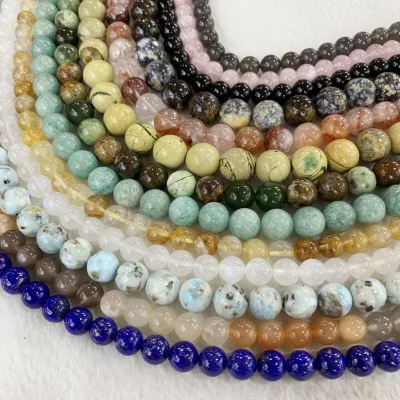
Color variety is another major application driver. The market offers a vast palette, including "Fire Opal," "Greige," "Emerald," "Citrine," "Amethyst," "Rose Quartz," and various shades of blue, green, and red. Some listings specify "Mixed Color" or "Beads Colour: more colors for choice," which allows designers to create gradient effects or multi-tonal pieces. The "Crafts" attribute, such as "colorful plated," suggests that some beads may feature metallic accents or coatings, expanding their use in fashion jewelry that mimics precious stones. Designers must consider the "Shape" (Round vs. Flat Round) when planning the drape and texture of their final products, as flat round beads may lay differently on a strand compared to perfectly spherical ones.
Supplier Evaluation and Selection Criteria
Selecting the right supplier requires a rigorous evaluation process that goes beyond the basic product listing. Buyers should prioritize suppliers who provide clear "Model Numbers" and "Item Numbers," as these serve as unique identifiers for quality control and reordering. For example, model numbers like "151117105748" or "JBZ04" and product codes like "starsgem-GL100231" indicate a structured inventory system. The presence of a specific "Brand Name," such as "Newegg," "JBZ," or "Starsgem," can also be a proxy for the supplier's market reputation, though buyers should verify these brands independently.
When evaluating suppliers, buyers should assess the consistency of their product descriptions. Discrepancies in attributes, such as conflicting "Place of Origin" data for the same product line or vague "Crystal Type" descriptions, can signal a lack of quality control. A reliable supplier will provide detailed specifications for "Single gross weight" (e.g., 0.150 kg or 0.015 kg) and "Single package size," which are essential for accurate shipping cost calculations and logistics planning. Furthermore, the availability of "Customization" services and the ability to meet specific "Packing" requests (e.g., "According Customer Request") are strong indicators of a supplier's flexibility and customer service orientation.
Quality Control and Long-Term Procurement Considerations
Maintaining consistent quality in the supply of faceted crystal beads requires a proactive quality control strategy. Buyers should verify the "Cutting" method, specifically looking for "Round Faceted Cut" specifications to ensure the light-refracting properties are consistent. The "Surface Treatment" of "Polished" beads should be inspected for uniformity, as uneven polishing can detract from the aesthetic appeal. For long-term procurement, establishing a clear definition of "Quality" standards is essential. While "AAA" is a common designation in the market, it is not a universally standardized term. Buyers should request sample inspections to define what "AAA" means in the context of their specific project, focusing on color consistency, facet sharpness, and the absence of chips or cracks.
Long-term relationships with suppliers depend on the stability of the supply chain. Buyers should consider the "Lead Time" and "MOQ" flexibility when planning production schedules. Suppliers with lower MOQs may be better suited for agile manufacturing or small-batch releases, while those with higher MOQs may offer better economies of scale for mass production. The "Standard" of the product, such as the "AAA" designation, should be documented in the purchase agreement to ensure that future orders meet the same quality benchmarks. Additionally, buyers should verify the "Gemstone Material" and "Crystal Type" for each order, as these can vary even within the same product line. Ensuring that the supplier can consistently deliver the specific "Color" and "Shape" required is vital for maintaining brand integrity in the final jewelry products.
Final Procurement Strategy and Risk Mitigation
To conclude, successful sourcing of Round Faceted Cut Crystal Beads requires a balanced approach that combines technical verification with strategic supplier management. Buyers must navigate the diverse range of materials, from pure crystal to glass and lampwork, ensuring that the selected material aligns with the intended application and price point. The wide range of observed prices and MOQs necessitates a clear understanding of the total cost of ownership, including packaging and shipping logistics.
By focusing on verified attributes such as "Third Party Appraisal," specific model numbers, and consistent origin data, buyers can mitigate the risks associated with counterfeit or substandard products. The ability to customize colors, sizes, and packaging adds significant value, allowing for unique product differentiation. Ultimately, the procurement strategy should prioritize suppliers who demonstrate transparency in their specifications, offer flexible order quantities, and maintain a track record of consistent quality. This disciplined approach ensures a steady supply of high-quality beads that meet the rigorous demands of the jewelry and crafting industries.
FAQs
What materials are used for Round Faceted Cut Crystal Beads?
These beads are made from crystal, glass stone, lampwork, and glass materials. Some listings specify pure crystal while others use glass stone or lampwork, so verify the material composition before purchase.
Which certifications are available for these beads?
Third Party Appraisal certificates are available for some products to validate attributes. Buyers should request specific certificate documents to ensure material safety and quality standards are met.
How do prices vary for Round Faceted Cut Crystal Beads?
Prices range from zero to 44.8 USD depending on size, material, and customization. Lower costs often correlate with smaller sizes like 3mm, while larger dimensions or premium finishes command higher prices.
Can I find beads with specific certifications from China?
Yes, suppliers from Guangdong, Chongqing, and Wuzhou offer products with Third Party Appraisal certificates. Origin verification is essential as different regions may have varying industrial capabilities and quality control standards.
What are the minimum order quantities for these beads?
Minimum order quantities range from 1 piece to 3000 pieces depending on the supplier. Some vendors require 100 pieces minimum, while others allow single item purchases for prototyping or small batches.
Which shapes are available for faceted crystal beads?
Available shapes include Round and Flat Round forms with various diameters. Dimensions range from small 3mm sizes up to larger 18x10mm, affecting how light refracts and how the beads drape in jewelry.